The whole range
Wardrobes & armoires
Eight products, five frame finishes and six door panels. They share one aluminium section and one 32 mm shelf pitch, so everything fits everything — and the decision is only ever about the room.
Quick answer: what size wardrobe do I need?
For one person, allow about 1000 mm of hanging rail for a full wardrobe of clothes; for two sharing, about 1800 mm. Depth is not a choice so much as a constraint: 600 mm external is the standard because a clothes hanger is 450 mm across the shoulders and anything shallower makes you hang sideways. Height is decided by your ceiling — a 2000 mm cabinet needs about 2060 mm of clearance to tilt upright during assembly, and a 2300 mm one needs about 2360 mm. If the room has less than 600 mm of clear floor in front of the wardrobe, a hinged door will not open fully and you want a sliding one instead.
Showing 8 of 8
Accessories
Drawers, lighting, rails and shelves
All of it clamps to the same 32 mm pitch, fits every product in the range, and comes out again without a mark.
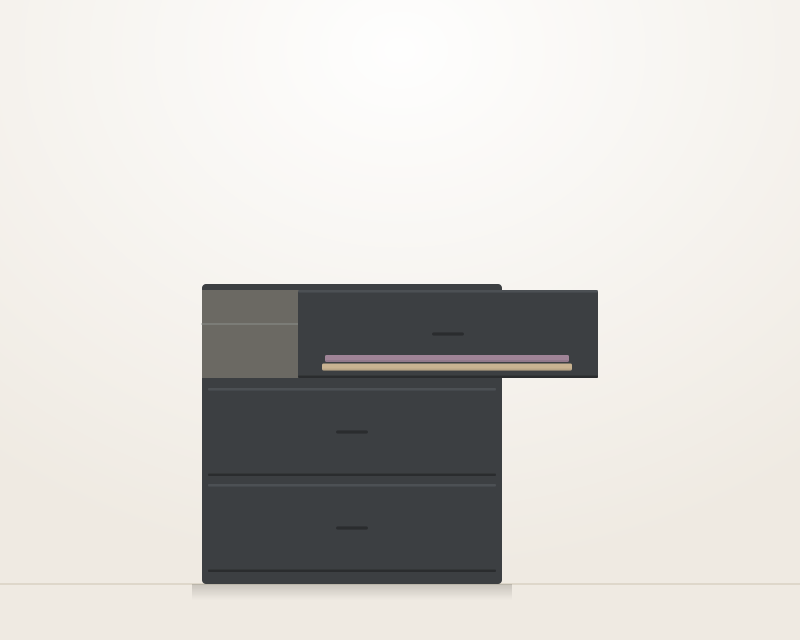
Soft-Close Drawer Module
Three drawers, drops into any bay
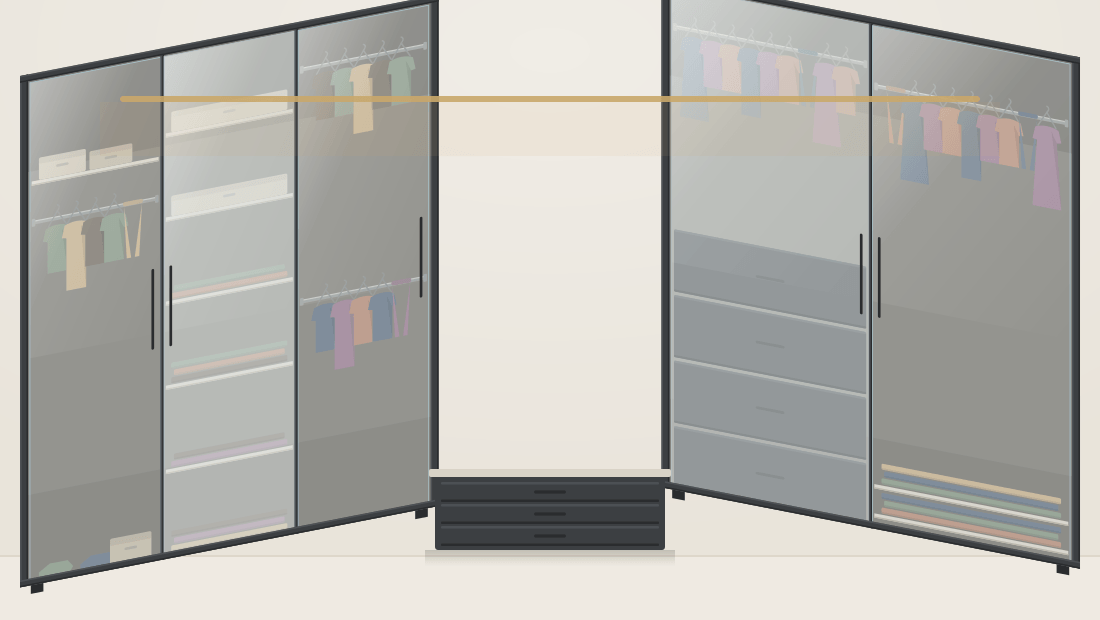
A three-drawer module on full-extension runners that drops into a Vitrine, Meridian or Openwork bay and clamps to the uprights. No tools beyond the supplied key, and it comes out again just as easily.
600–900 mm wide
From S$330
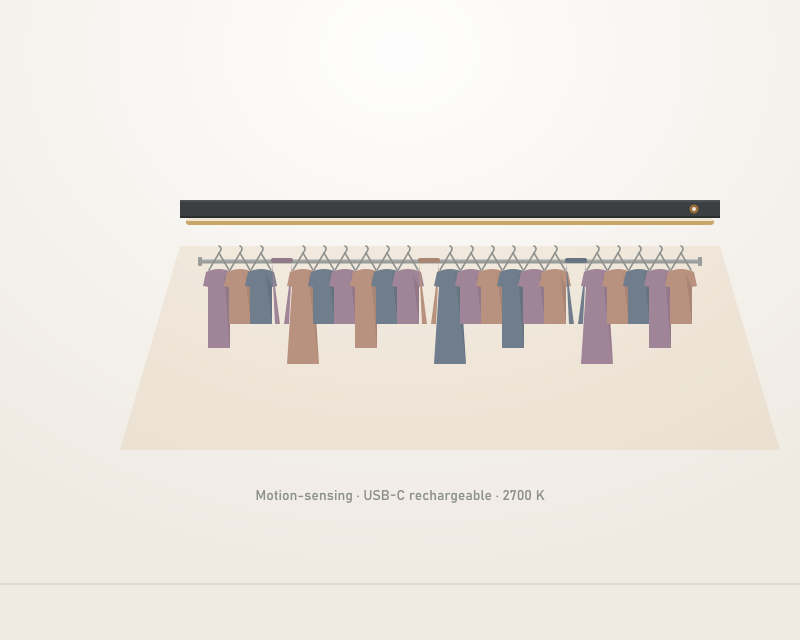
LED Rail with Motion Sensor
Light that comes on when the door does
A slim LED strip that clips into the top rail channel and lights the bay when the door opens. Runs off a rechargeable cell, so there is no wiring and no electrician.
500–1500 mm wide
From S$120
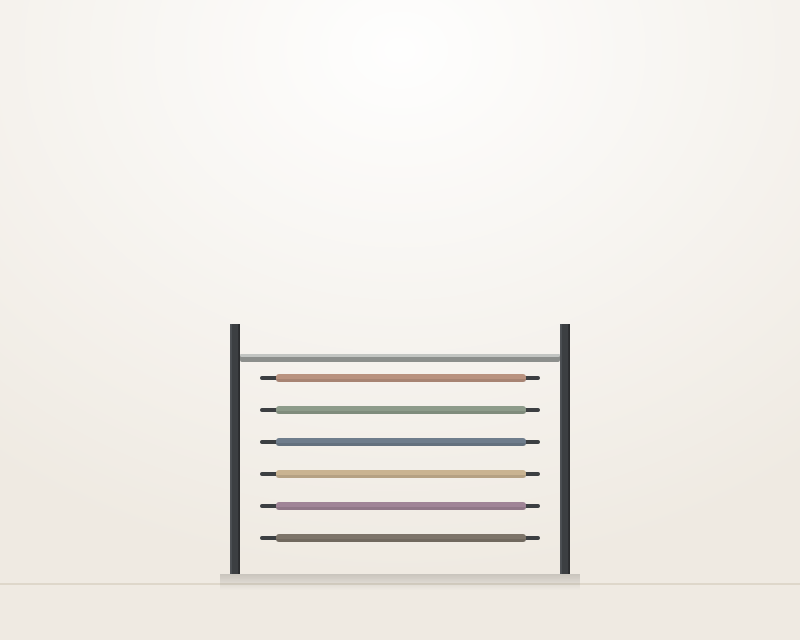
Pull-Out Trouser Rail
Twelve pairs, in the depth of one
A full-extension pull-out rail with twelve non-slip arms, for trousers hung at the fold rather than folded over a hanger. Clamps to the frame on the same pitch as the shelves.
12 arms, 500 mm extension
From S$180
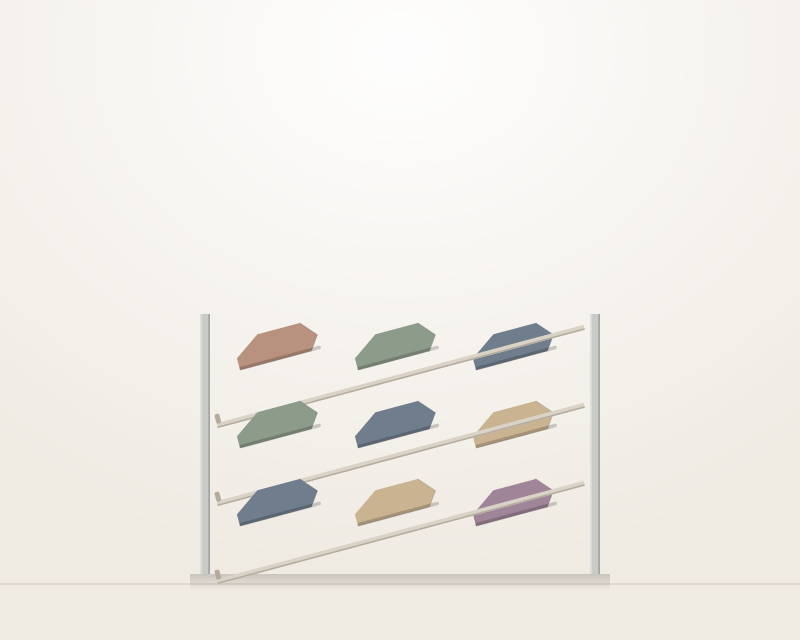
Angled Shoe Shelf
Shoes facing out, not stacked in a pile
A 15° angled shelf with a front lip, so shoes sit toe-out and visible instead of disappearing to the back of a flat shelf. Sold as a pair, in the same laminate as the standard shelves.
600–900 mm wide
From S$130
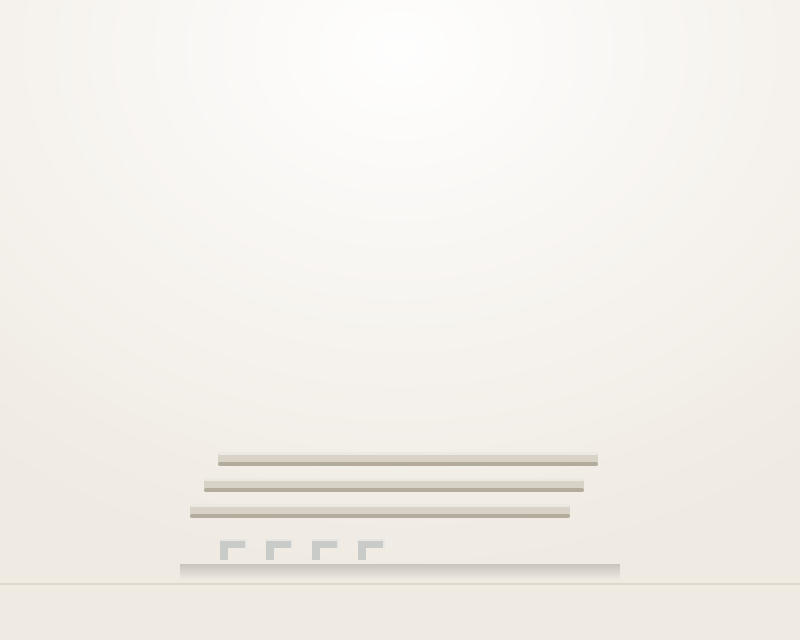
Additional Shelf Kit
Three more shelves, same pitch
Three extra shelves with the clamps to hang them, in the same 18 mm compact laminate as the ones your wardrobe came with. For turning a hanging bay into a folded-storage bay.
600–900 mm wide
From S$110
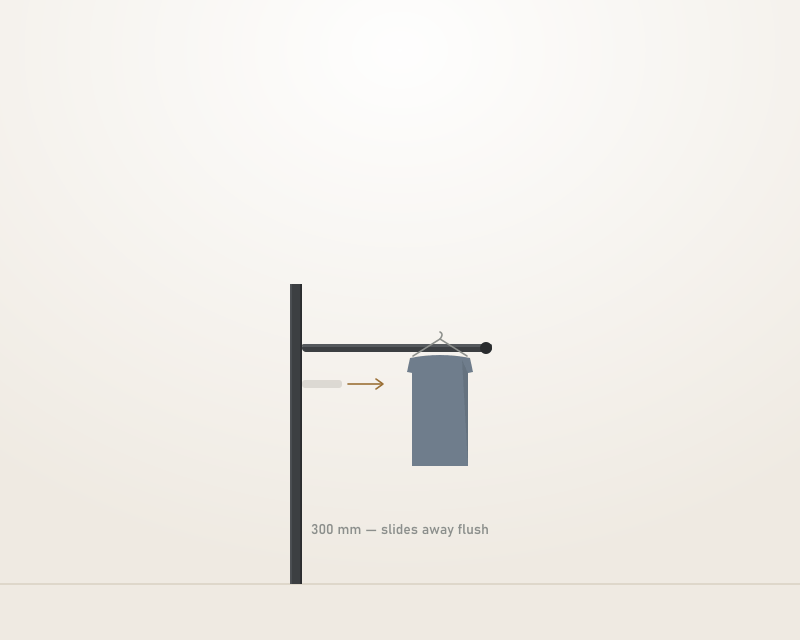
Valet Rod
Somewhere to hang tomorrow
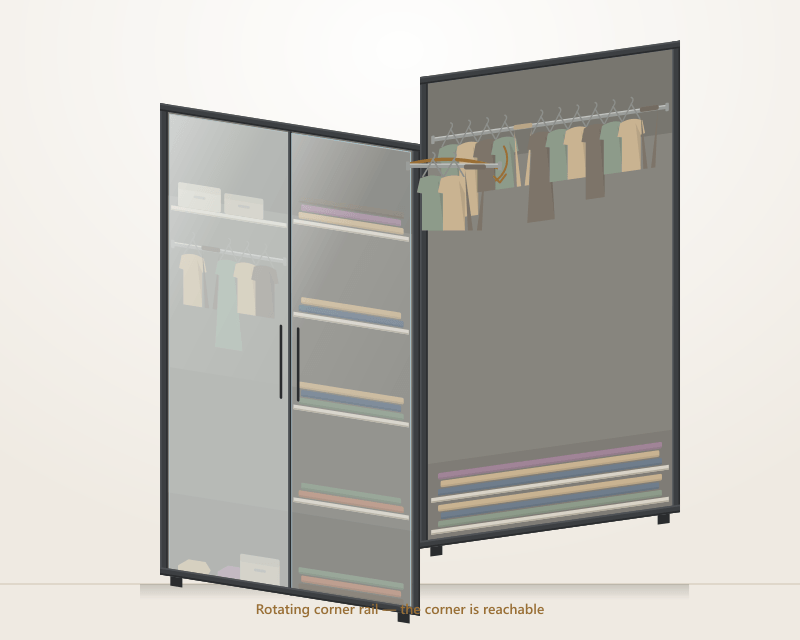
A 300 mm pull-out rod for hanging tomorrow's outfit, an ironed shirt or the things you are deciding between. Slides away flush when you are done.
300 mm extension
From S$90
Choosing between them
How much hanging space does one person need?
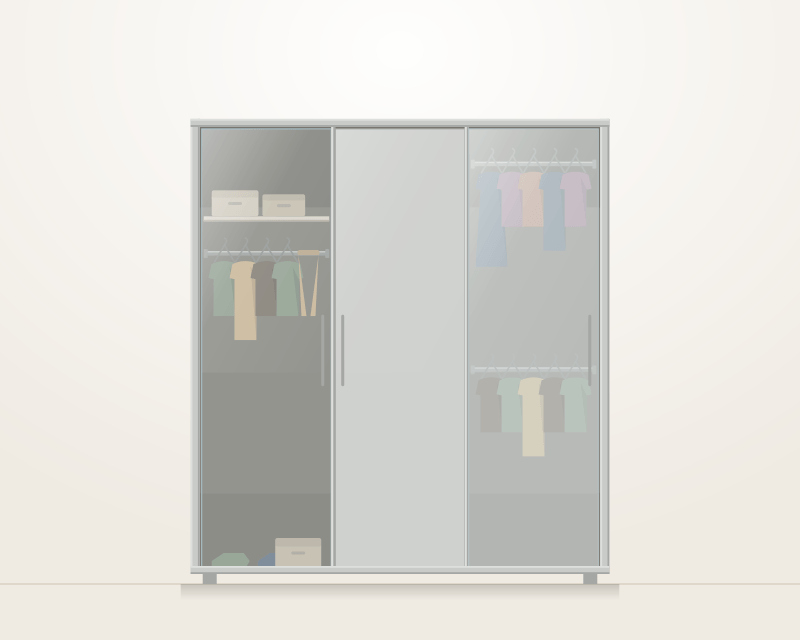
About 1000 mm of rail holds a full year-round wardrobe for one person in Singapore, where there is no bulky winter coat to account for. A couple sharing wants around 1800 mm, which is why the 1800 mm three-door is our most common order for a main bedroom. If most of what you own is folded rather than hung, buy less rail and more shelf — the Additional Shelf Kit converts a hanging bay in about ten minutes.
Which one should I buy?
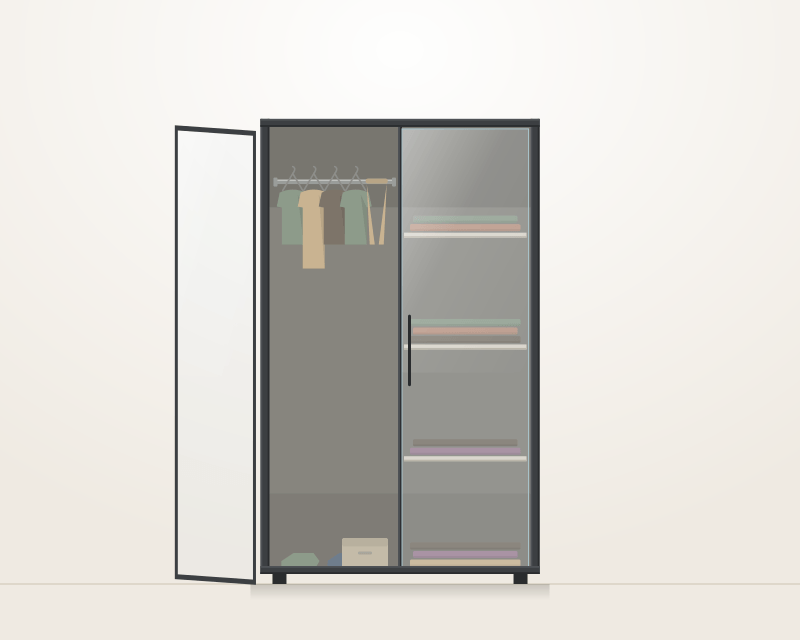
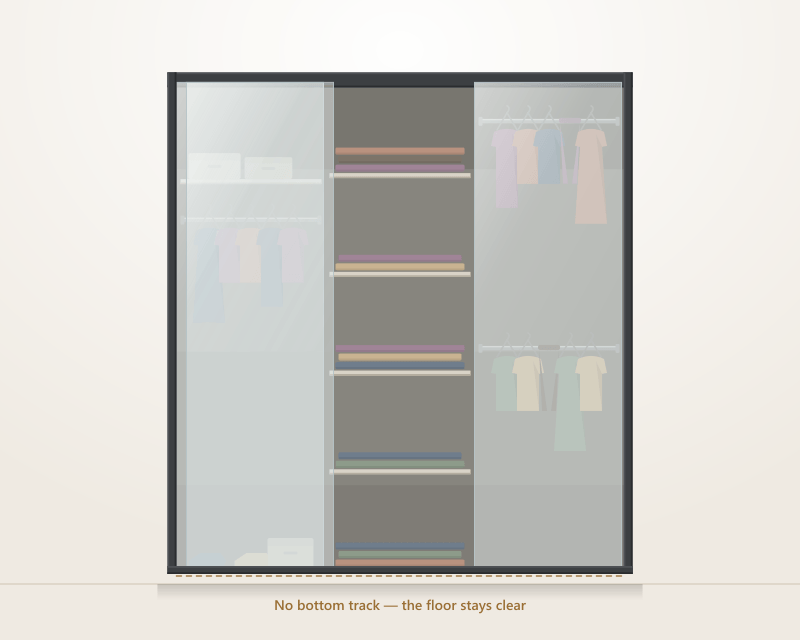
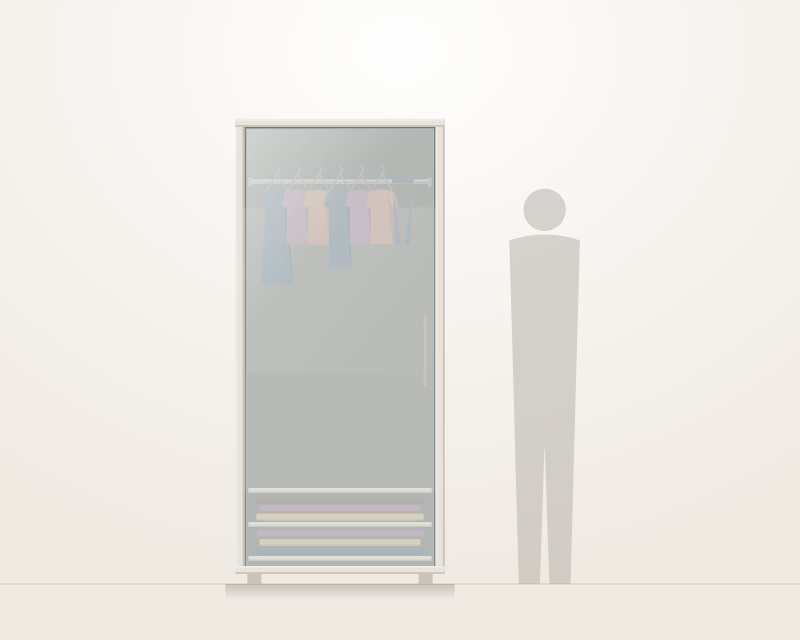
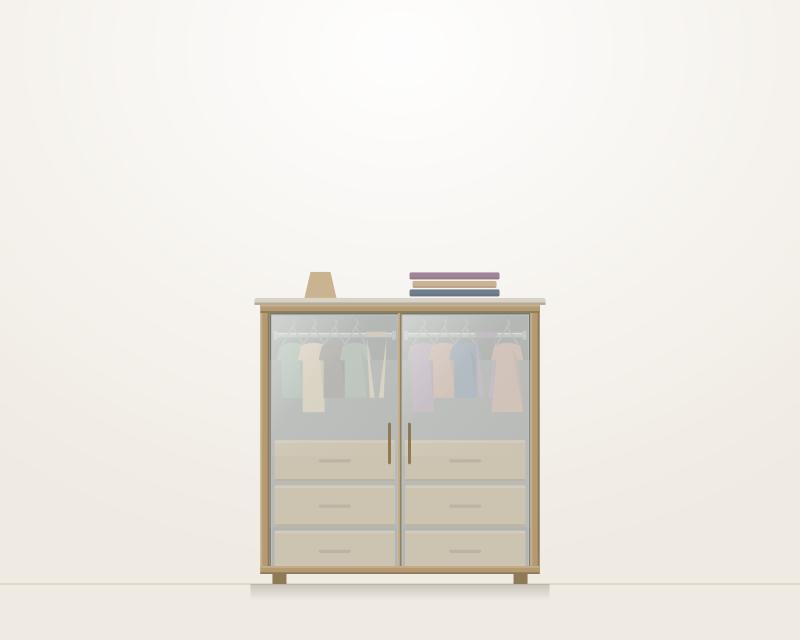
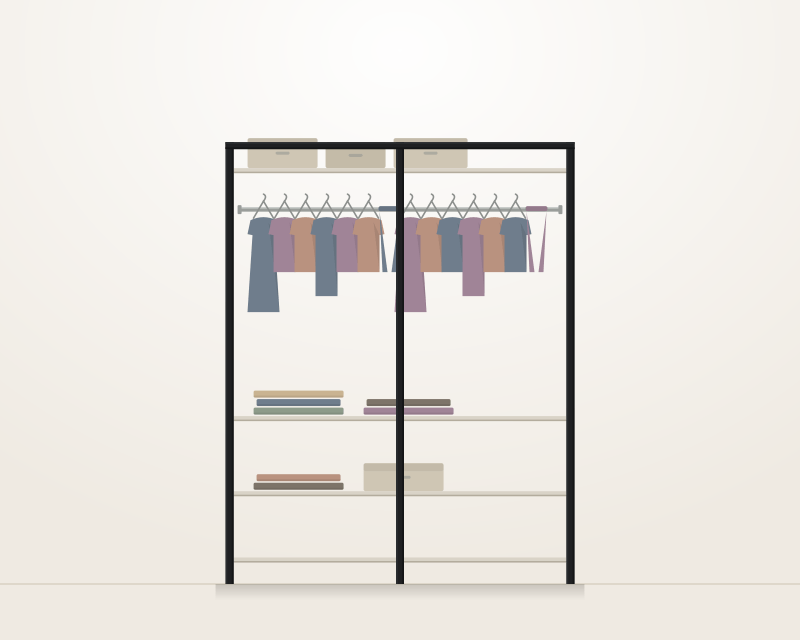
Start from the room, not the catalogue. If the clear floor in front of the wardrobe wall is under about 600 mm, you need the Meridian sliding wardrobe and the decision is made. If you have the clearance, the Vitrine two-door suits a single person or a secondary bedroom and the three-door suits a couple sharing. If the wall has a window in it, the Loft armoire goes under the sill where a full-height cabinet cannot. If the wardrobe is going inside a walk-in or a dressing area, buy the Openwork rail and do not pay for doors the room already provides.
Can I order more than one and have them match?
Yes, and the finishes are held as stock rather than run in batches, so a second unit bought a year later will match the first. Two Vitrine two-doors side by side read as a continuous run — there is a 4 mm reveal between the frames, which looks deliberate rather than like a gap. If you want a genuinely seamless run with no reveal at all, that is a made-to-measure order.
Freestanding or built-in — which is better?
Built-in uses the space marginally better, because it has no frame section, no door gap and it can run into an awkward corner. Freestanding wins on everything else: it costs less, it arrives in days rather than weeks, it does not need a carpenter in your bedroom for three days, it can be reconfigured, and it moves house with you. In Singapore, where a great many people are in a property for five to seven years, that last point is worth more than the few percent of volume you give up.
Do these need to be fixed to the wall?
Yes. Every wardrobe ships with an anti-tip bracket and it should be fitted — a tall cabinet with a loaded drawer or a child on an open door has a real tipping moment regardless of how heavy it is. The bracket is two fixings into the wall behind, it is invisible once the wardrobe is in place, and it takes about five minutes. Our assembly service always fits it.